
Views: 3 Author: Site Editor Publish Time: 2026-01-25 Origin: Site


Content Menu
● Introduction: The Material Revolution in the Age of Lightweighting
● 1. PEEK Material: Analysis of Performance Advantages
>> 1.1 Lightweight Core Indicators: Density Comparison
>> 1.2 Mechanical Properties: Balance of Strength and Stiffness
>> 1.3 Temperature Resistance and Thermal Stability
>> 1.4 Chemical Stability and Corrosion Resistance
>> 1.5 Wear Resistance and Self-Lubrication Properties
● 2. Application Scenarios of PEEK as an Alternative to Metals
>> 2.2 Application in the Automotive Industry
>> 2.4 Electronics and Electrical Industry
>> 2.5 Chemicals and Energy Sector
>> 3.2 Differences in Design Methods
>> 3.3 Connection and Assembly Technology
>> 3.4 Surface Treatment and Post-Processing
● IV. Comparison of PEEK with Other Lightweight Materials
>> 4.1 Comparison with Metal Matrix Composites
>> 4.2 Comparison with Other High-Performance Engineering Plastics
>> 4.3 Comparison with Carbon Fiber Reinforced Composite Materials
● V. Future Development Trends
>> 5.1 Breakthrough in Material Modification Technology
>> 5.2 Cost Reduction and Large-scale Application
>> 5.3 Innovation in Design Methods
>> 5.4 Circular Economy and Sustainable Development
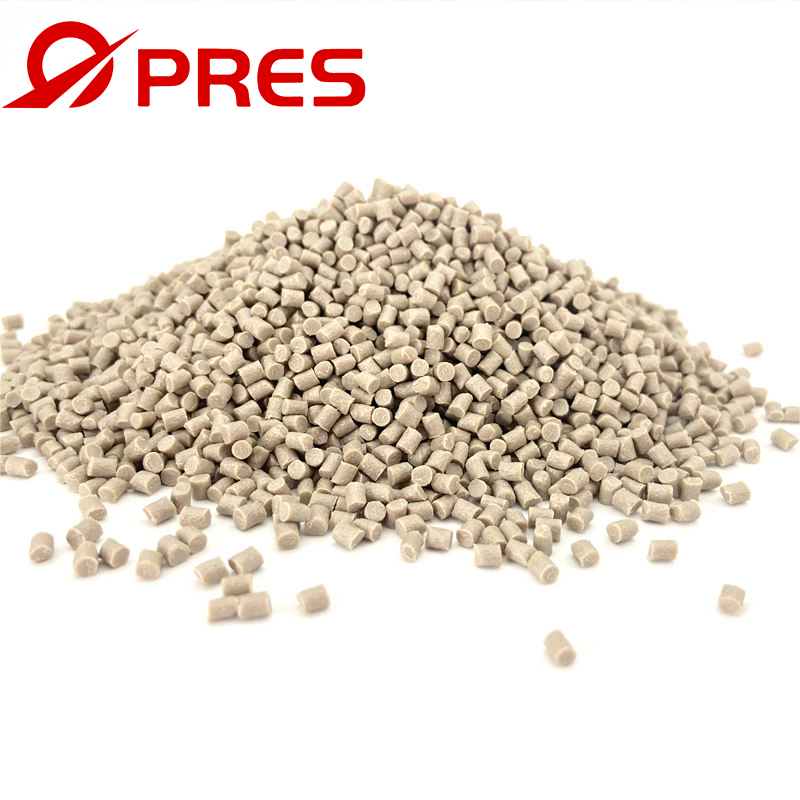
In the high-end manufacturing fields such as aerospace, automotive manufacturing, and medical devices, lightweighting has become an irreversible technological trend. Although traditional metal materials have high strength and good thermal resistance, their limitations such as high density, complex processing, and high cost are becoming increasingly prominent. The rise of high-performance engineering plastics is rewriting the traditional perception that "metal cannot be replaced". Among them, polyetheretherketone (PEEK) material, with its outstanding comprehensive performance, has become one of the key materials for replacing metals and achieving lightweighting.
The density of PEEK material is approximately 1.32 g/cm³, which is only 50% of that of aluminum alloy, 30% of titanium alloy, and 17% of steel. This means that in the same volume, the weight of PEEK components can be significantly reduced by 50% to 80%. This remarkable weight reduction effect is particularly crucial in the aerospace field - every 1 kg reduction in weight can save a significant amount of fuel costs; in the automotive industry, lightweighting directly relates to energy consumption reduction and improved range.
The tensile strength of PEEK can reach over 100 MPa, and its bending modulus is approximately 4 GPa. Although it is not as high as that of high-strength steel, it is close to the levels of certain aluminum alloys and magnesium alloys. More importantly, its specific strength (strength/density) and specific modulus (modulus/density) perform exceptionally well, offering significant advantages in lightweight design. Through fiber reinforcement modification (such as carbon fiber and glass fiber reinforced PEEK), its mechanical properties can be further enhanced, even reaching or exceeding those of some metal materials.
The long-term operating temperature of PEEK can reach 250℃, and it can withstand a short-term temperature of 300℃. The glass transition temperature is approximately 143℃, and the melting point is about 343℃. This temperature resistance property enables it to be suitable for most industrial applications, which is much higher than that of common engineering plastics (such as nylon, POM, etc.). In high-temperature environments, PEEK can still maintain good mechanical properties, which is one of the key factors for it to replace metals.
PEEK has excellent tolerance to most chemical reagents, including acids, bases, and organic solvents, and is almost insoluble in any common solvent. This characteristic gives it advantages over metals in corrosive environments such as those found in the chemical and medical industries - no surface treatment is required, it won't rust, and has a longer service life.
PEEK has a low friction coefficient and excellent wear resistance. In certain working conditions, it can be used as a self-lubricating material, reducing or eliminating the need for a lubrication system, thereby simplifying the structure and reducing weight. This characteristic is of significant value in moving parts such as bearings, gears, and seals.
In aircraft components such as structural parts, interior parts, and connectors, PEEK has successfully replaced metal materials like aluminum and titanium. For instance, the Boeing 787 passenger aircraft extensively uses carbon fiber reinforced PEEK composite materials, achieving a weight reduction of over 20%. Components around the engine and parts of the fuel system, by leveraging PEEK's high-temperature resistance and chemical corrosion resistance, not only reduce weight but also enhance reliability.
Automobile lightweighting is an important way to achieve energy conservation and emission reduction. PEEK is gradually replacing metals in areas such as the engine periphery (such as timing chain guides, turbocharger components), transmission systems (bearing cages, gears), and electronic connectors. In the field of electric vehicles, the structural components of battery packs and charging interfaces have higher requirements for lightweighting, and the application prospects of PEEK are broad.
Medical equipment has extremely strict requirements for materials: lightweight, biocompatibility, sterilizability, X-ray transmissibility, etc. PEEK has been widely used in fields such as orthopedic implants (spinal fusion devices, bone screws), surgical instruments, and dental equipment. Its X-ray transmissibility is superior to that of metals, making it convenient for postoperative observation; it is lightweight, reducing the burden on patients; and it can be sterilized by gamma rays or high-pressure steam.
Connectors, insulating components, semiconductor manufacturing equipment parts, etc., traditionally used metals or ceramics. PEEK has excellent dielectric properties, resistance to electric arcs, high temperature resistance, good processing performance, and relatively low cost. It has become one of the preferred materials for high-end connectors.
Pump valves, seals, piping systems, etc., in corrosive media, the chemical corrosion resistance of PEEK enables its service life to far exceed that of stainless steel. In harsh environments such as oil and gas extraction and chemical production, PEEK components can reduce maintenance frequency and minimize downtime losses.
III. Technical Challenges and Solutions for PEEK as an Alternative to Metal Materials
The price of PEEK raw materials is relatively high (about 10-20 times that of ordinary engineering plastics), which is the main obstacle restricting its large-scale application. Solutions include: optimizing design (through topological optimization and structural optimization to reduce material usage), developing low-cost modified formulations, and improving recycling utilization rate, etc. As the production scale expands and technology progresses, the cost is expected to gradually decrease.
There are differences in design concepts between metals and plastics: Metal design focuses on strength and rigidity, while plastic design needs to consider creep, fatigue, anisotropy and other characteristics. Engineers need to change their design thinking and use CAE simulation technology for structural optimization, fully leveraging the material properties of PEEK.
Metal parts are usually welded or riveted, while PEEK requires special processes such as adhesive bonding, mechanical connection or ultrasonic welding. This necessitates redesigning the connection structure and developing dedicated connection technologies. Moreover, the thermal expansion coefficients of PEEK and metal are significantly different, and stress may be generated when the temperature changes, which needs to be compensated through structural design.
The surface of the metal can be treated with electroplating, spraying, etc. to improve its performance, while the surface treatment technology of PEEK is relatively limited. Currently, methods such as plasma treatment and chemical etching are mainly used to enhance the surface energy and improve the bonding performance. In terms of secondary processing, the machining performance of PEEK is good, but attention should be paid to the control of cutting parameters to avoid performance degradation due to overheating.
Metal matrix composites (such as aluminum-based and magnesium-based composites) also have the potential for lightweighting, but they are more costly and have more complex processing. PEEK composites have advantages in specific strength, corrosion resistance, and molding flexibility, and are particularly suitable for complex shapes and small-batch production.
Polyparylene sulfide (PPS), polyimide (PI), polyetherimide (PEI) and other materials have overlapping properties with PEEK, but PEEK has a more balanced overall performance. PPS has slightly lower temperature resistance but lower cost; PI has higher temperature resistance but is more difficult to process and more expensive. PEEK achieves a good balance among performance, processing properties and cost.
Carbon fiber reinforced epoxy resin and other thermosetting composite materials have extremely high specific strength, but they have poor toughness, are not recyclable, and have a long molding cycle. PEEK, as a thermoplastic matrix, can be recycled, has good toughness, and has a fast molding speed. It has obvious advantages in terms of repairability and environmental friendliness.
Through modification techniques such as nano-fillers, fiber reinforcement, and alloying, the mechanical properties, temperature resistance, and wear resistance of PEEK will be further enhanced. The development of PEEK filament and powder for 3D printing will expand its application in rapid prototyping and customized production.
With the optimization of production processes and the promotion of domestic production of raw materials, the price of PEEK is expected to gradually decrease. In fields such as automobiles and consumer electronics, which have large volumes and wide applications, once the cost exceeds the critical point, there will be an explosive growth.
Advanced design methods such as topology optimization and generative design based on artificial intelligence will help engineers fully exploit the material potential of PEEK, achieving "optimal performance with the least amount of material".
As a thermoplastic material, PEEK can theoretically be recycled multiple times. In the future, a complete recycling system needs to be established, and efficient recycling technologies should be developed to reduce the environmental impact throughout the entire life cycle. This is in line with the development direction of green manufacturing.
PEEK material, with its outstanding comprehensive properties such as light weight, high strength, high temperature resistance, corrosion resistance, and self-lubrication, demonstrates great potential to replace metals in various fields. Although it still faces challenges such as high cost and the need for a change in design methods, with technological progress, cost reduction, and accumulation of application experience, the application prospects of PEEK in the field of lightweighting are broad. For design engineers, the key lies in changing the "metal mindset", fully understanding the characteristics of plastic materials, and through optimized design and rational material selection, achieving the maximum lightweighting while meeting performance requirements, promoting the manufacturing industry towards a more efficient and environmentally friendly direction.
Lightweighting is not merely a matter of material substitution; it is also a revolution in design concepts. The rise of high-performance engineering plastics such as PEEK is redefining "what constitutes an appropriate material". In the future, as the collaborative progress of materials science, manufacturing technology, and design methods continues, we can expect to see more innovative applications of "replacing steel with plastic", contributing to the sustainable development of human society.