
Views: 0 Author: Site Editor Publish Time: 2025-12-23 Origin: Site


Content Menu
● Key Properties & Performance
PEEK 3D printing filament is a high-performance material renowned for its exceptional properties, making it suitable for demanding industrial applications. Here is a summary of its key characteristics and performance metrics:
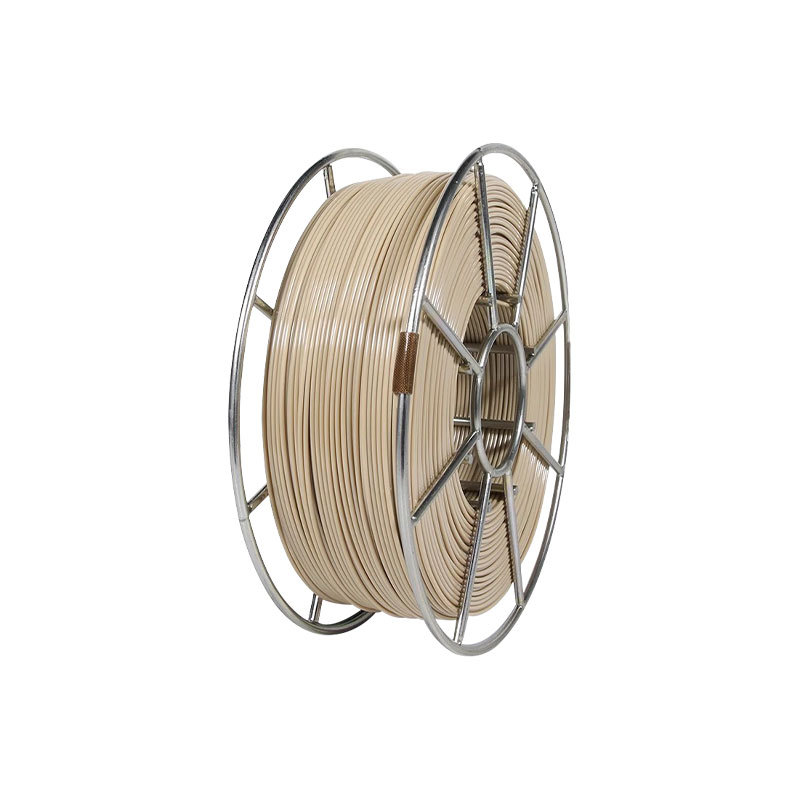
Thermal Resistance: With a melting point of approximately 343°C and the ability to withstand continuous use at temperatures up to 260°C (with short-term tolerance up to 300°C), PEEK is ideal for high-temperature environments.
Mechanical Strength: It exhibits high tensile strength (around 100 MPa), stiffness, and impressive impact resistance, often compared to metal alloys.
Chemical Resistance: PEEK is highly resistant to a wide range of chemicals, including acids, bases, and organic solvents, with the exception of concentrated sulfuric acid.
Biocompatibility: It is biocompatible, meeting standards like ISO 10993 and USP Class VI, making it suitable for medical implants and devices that require sterilization.
Flame Retardancy: PEEK is self-extinguishing and complies with UL94 V-0 flame retardancy standards.
Low Moisture Absorption & Excellent Dimensional Stability: These properties ensure part accuracy and performance even in varying humidity conditions.
Self-Lubricating & Wear Resistance: Its low friction coefficient makes it excellent for moving parts like bearings and gears without needing additional lubrication.
Printing with PEEK filament requires specialized equipment and conditions:
Nozzle Temperature: Typically between 370°C to 440°C.
Heated Bed Temperature: Generally 120°C to 150°C, with an enclosed heated chamber (around 150°C or higher) often recommended to prevent warping and ensure layer adhesion.
Print Speed: Usually slow, around 20-40 mm/s, to ensure proper extrusion and layer bonding.
Filament Drying: Essential before use, typically at 120°C to 150°C for several hours, to remove moisture.
PEEK filament is widely used in industries such as:
Aerospace: For lightweight, high-strength components like engine parts and brackets.
Medical: For implants, surgical instruments, and dental devices due to its biocompatibility and sterilizability.
Automotive: For under-the-hood components, gears, and bearings requiring heat and chemical resistance.
Oil & Gas and Chemical Processing: For valves, seals, and pump parts that endure harsh conditions.
In summary, PEEK 3D printing filament offers a unique combination of high thermal stability, mechanical strength, and chemical resistance, but it demands advanced 3D printing capabilities to fully utilize its potential.
