
Views: 1 Author: Site Editor Publish Time: 2025-12-30 Origin: Site


PEEK 3D printing uses a high-performance thermoplastic (polyether ether ketone) that demands specialized high‑temperature printers but delivers very strong, heat‑ and chemical‑resistant parts. It is mainly used in demanding applications like aerospace, medical, automotive, and oil & gas where metal replacement and high service temperatures are needed.
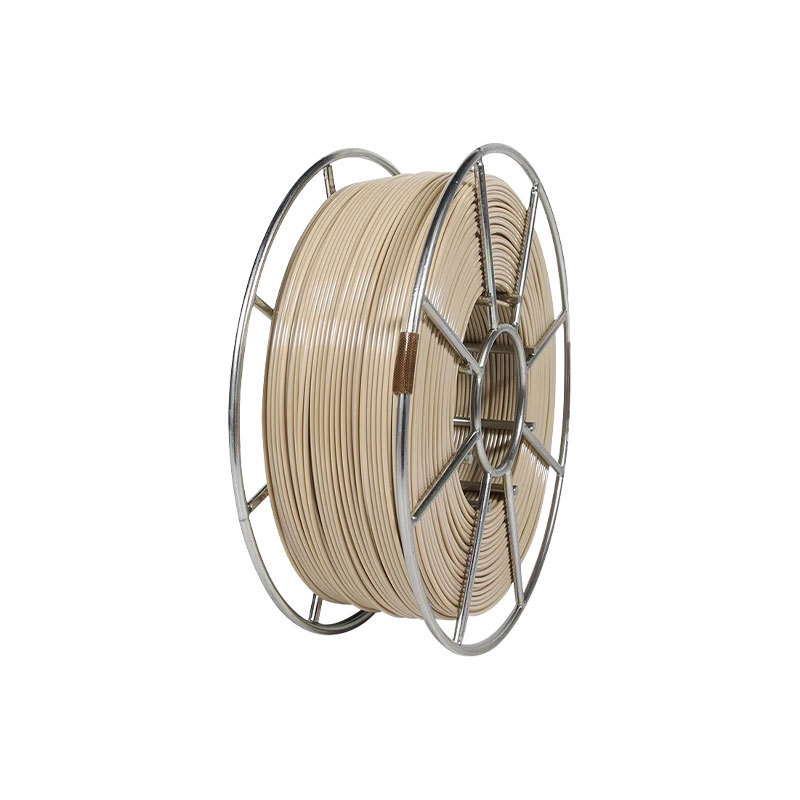
High-flow PEEK significantly reduces melt viscosity by optimizing molecular weight distribution and molecular chain structure. Research shows that medium-molecular-weight PEEK materials such as PEEK880G exhibit excellent fluidity and can achieve stable printing at a nozzle temperature of 410 ° C and in a high-temperature chamber environment, significantly reducing printing defects. Compared with low-flow PEEK, the melt viscosity of high-flow PEEK can be reduced by 30-50% at the same temperature. This enables the material to pass through the nozzle more smoothly, reduces stringing and spillage, and improves printing accuracy.
Interlayer bonding strength is a key performance indicator for 3D printed PEEK parts. High-flow PEEK has better wettability and spreading property in the molten state, and can fully penetrate into the solidified material beneath, forming a stronger molecular chain entanglement and mechanical interlocking structure. Experimental data show that as the viscosity of PEEK decreases, the interlayer bonding strength significantly increases, and the tensile strength in the Z-axis direction can reach 96MPa, approaching the performance level of injection molding. This excellent interlayer bonding force ensures the structural integrity of the printed parts in complex stress environments.