
Views: 3 Author: Site Editor Publish Time: 2026-02-18 Origin: Site


Content Menu
>> 1.1.Outstanding high-temperature resistance:
>> 1.2. ESD stability under high temperatures: The core advantage
>> 2.1. Low hygroscopicity and anti-creep property:
● 3. Outstanding comprehensive mechanical properties: Robust and durable engineering support
>> 3.1. Excellent wear resistance and fatigue resistance:
>> 3.2. Outstanding chemical resistance and cleanliness:
>> 3.3. Excellent machinability:
● Conclusion: Irreplaceable systematic advantages
In the field of advanced precision manufacturing, whether it is semiconductor chip production, aerospace components, high-end medical devices or precision optical instruments, the choice of materials is often the key factor determining the success or failure of the product, the performance limit and the production yield.
In these application scenarios that have extremely strict requirements for environmental cleanliness, dimensional stability and reliability, a type of engineering plastic called "Electrostatic Discharge Polyether Ether Ketone (ESD PEEK)" has become the preferred choice for an increasing number of engineers.
Why is PEEK plastic so reliable? This is because of its unparalleled combination of comprehensive properties: extreme high-temperature resistance and resistance stability, excellent dimensional stability and outstanding mechanical properties.

High precision manufacturing, especially in semiconductor and microelectronics production, often involves working in high-temperature environments. For instance, during the baking, welding, or packaging processes of chips, the tooling fixtures and carrier trays need to be exposed to temperatures of 150°C or even above 200°C for a long time. Ordinary engineering plastics will soften, deform, or even decompose under these conditions, while metal materials, although resistant to high temperatures, may cause contamination, scratches, or static electricity risks.
PEEK resin is inherently an ultra-high-performance thermoplastic polymer. Its glass transition temperature is as high as 143°C, and its melting point is approximately 334°C. The long-term continuous operating temperature can reach above 260°C, and the short-term temperature resistance peak even exceeds 300°C. This inherent high-temperature resistance feature enables the anti-static PEEK board to maintain structural integrity in most high-temperature sections of precision manufacturing, without softening, creep, or releasing low-molecular volatile substances due to heat, thereby avoiding the risk of contaminating sensitive products and the processing environment.

However, high-temperature resistance is just the foundation. For anti-static materials, their resistance stability in high-temperature environments is the key factor that distinguishes good from bad products. Many traditional anti-static materials (such as some with added surfactants or carbon black) meet the resistance standards at normal temperatures, but once the temperature rises, their conductive pathways or ion migration mechanisms change, causing the resistance value to fluctuate sharply (usually sharply dropping), and even losing the anti-static function. This instability is catastrophic in precision manufacturing, as it may lead to the failure of static protection, causing product breakdown or dust adsorption.
The anti-static PEEK board is constructed with a stable, three-dimensional conductive network within the PEEK matrix through the use of a permanent, in-body compounded conductive filler system (such as carbon fibers, carbon nanotubes, or special organic conductive polymers). This structure, even at high temperatures, relies mainly on electron conduction for its conductive mechanism and is highly resistant to temperature changes. Therefore, its surface resistance/volume resistance can remain within a stable range over a wide temperature range (for example, from room temperature to 200°C) (typically designed at 10^46~ 10^9 Ω/sq, meeting the operational standards for ESD protection of sensitive devices). This high-temperature resistance stability ensures that static electricity is continuously and controllably dissipated throughout the entire heat process in production, providing a 24/7 static protection shield for valuable precision components.
Precision manufacturing, with the word "precision" directly indicating an almost obsessive pursuit of dimensional tolerances. Any minor deformation caused by the material itself could lead to assembly failure, optical path deviation, or degradation of product performance.
Extremely low thermal expansion coefficient:
The thermal expansion coefficient (CTE) of the anti-static PEEK board is extremely low, similar to that of metals (such as aluminum), and much lower than that of ordinary plastics. This means that when experiencing temperature fluctuations caused by equipment operation or thermal cycles during the process, its size change is negligible.
For example, in semiconductor lithography machines or high-precision measurement equipment, using PEEK made from anti-static materials for wafer carriers or structural components will not change the critical dimensions due to equipment heating, thus ensuring positioning accuracy and process consistency.
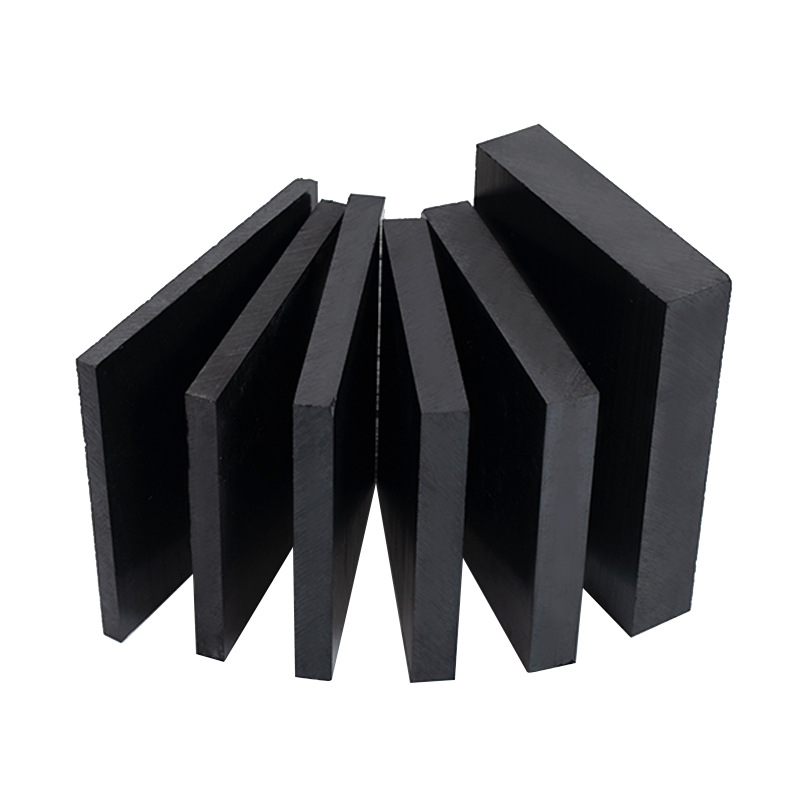
The PEEK material itself has an extremely low moisture absorption rate (saturation moisture absorption rate < 0.5%), which means that the anti-static PEEK board will hardly expand in size due to water absorption when used in a humid environment. At the same time, it exhibits excellent anti-creep performance under long-term load, that is, it has a strong ability to resist slow deformation under continuous pressure.
This is crucial for clamps and supports that need to bear tightening force or their own weight for a long time, ensuring that the geometric accuracy of key components remains unchanged after several years of operation.
The high-quality anti-static PEEK board achieves isotropic stability through uniform filler dispersion and mature processing techniques, ensuring the uniformity of material properties (including dimensional stability) in all directions. This is particularly beneficial for multi-sided parts that require complex machining, as it guarantees that regardless of the direction of cutting or force application, the deformation behavior is predictable and consistent, significantly simplifying the design and compensation challenges.
In addition to "stability", precision manufacturing components must also be "strong" and "resilient" to withstand the physical challenges posed by mechanical operations, high-speed movements, or repeated cleaning.
High strength and high modulus:
The anti-static PEEK board with fillers such as carbon fibers has significantly enhanced its tensile strength, bending strength and modulus, comparable to some metals. This enables it to be used for manufacturing thin-walled, lightweight components with high load-bearing requirements, such as the end actuators of robot arms, guide rails or bushings of high-speed automation equipment. While reducing the weight of moving parts (improving response speed), it provides sufficient structural rigidity.
PEEK is renowned for its outstanding wear resistance and self-lubrication properties. The anti-static PEEK board inherits this advantage and is highly suitable for components with frictional contact, such as bearings, gears, sliders, etc. Its low wear rate not only ensures its long lifespan but also avoids the generation of particle contaminants due to wear, which is a great blessing for cleanroom environments. At the same time, its fatigue resistance enables it to withstand millions of cycles of cyclic loads without failure.
The anti-static PEEK board can withstand a wide range of chemical attacks, including acids, bases, hydrocarbon solvents, and common industrial cleaning agents (such as IPA, acetone). This means it can be thoroughly cleaned and sterilized using powerful methods (such as plasma cleaning, high-temperature and high-pressure steam), without degradation or loss of performance, which perfectly meets the strict requirements for cleanliness and sterilization in the semiconductor and life science industries. It also has extremely low leaching properties, and does not release ions or organic pollutants into the environment.
Despite its outstanding performance, the anti-static PEEK board can still be precisely machined using conventional CNC machines for milling, turning, and drilling. It is easy to be processed into complex and precise parts, providing designers with a great deal of freedom.
In conclusion, the choice of anti-static PEEK plates in precision manufacturing is not merely based on its single "anti-static" or "high-temperature resistance" properties. Instead, it is a strategic adoption of its systematic engineering advantages. It successfully integrates three crucial attributes for precision manufacturing - the resistance stability at high temperatures, the dimensional stability in extreme environments, and the strength and durability sufficient to handle rigorous mechanical challenges - into a single entity.
On the modern precision manufacturing stage that strives for nanometer-level accuracy, 100% yield, and ultra-high reliability, anti-static PEEK boards play the role of a behind-the-scenes hero. They ensure the absolute stability and reliability of production equipment under the combined effects of heat, force, electricity, and chemistry, providing a solid, clean, and intelligent base for every delicate "carving" of cutting-edge technology. Therefore, its selection essentially means choosing the highest level of risk control, a commitment to the ultimate craftsmanship, and a future-oriented material solution.